Certifications That Matter When Your Name Is on the Bottle.
Manufacturing standards affect how a product is made, what ingredients can be used, what claims may be relevant, and what documentation a brand may need. Chaé Nutra operates with multiple facility, quality, ingredient, and product certifications in its Colorado manufacturing operation.
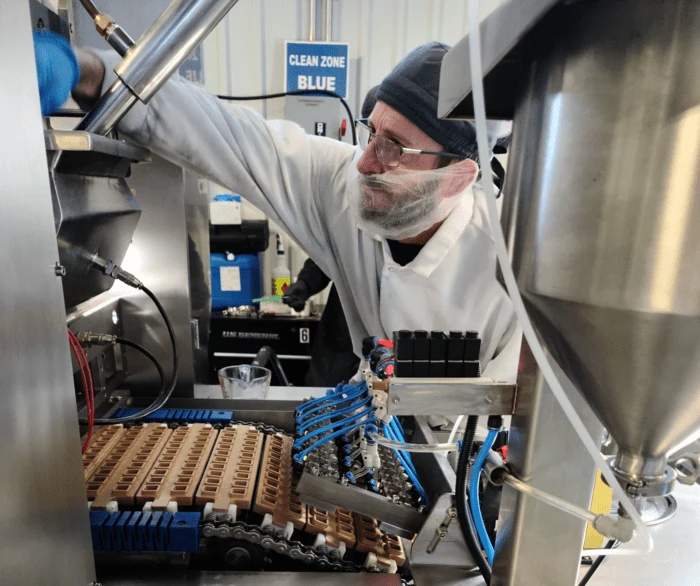
One Logo Does Not Tell You Everything.
Facility registration, manufacturing practices, ingredient standards, cruelty-free programs, religious certifications, and product-specific labels solve different problems. The useful question is which standards matter to the product you are trying to make.
How is the product manufactured?
cGMP, FDA registration, ISO-aligned processes, OTC capabilities, and facility audits speak to the operation and the systems around production.
What standards affect the formula?
ToxicFree®, Halal, Kosher, ECOCERT, and other project-specific requirements can influence sourcing, ingredient selection, formula direction, and documentation.
What can matter to your customer?
Leaping Bunny, biobased labeling, religious certifications, and environmental or ingredient standards can become part of how a finished product is positioned—when the project qualifies.
Click a Certification. See What It Actually Means.
Each standard below covers something different. Choose one to see what it addresses, why it may matter to a brand, and where it can fit into a manufacturing project.
cGMP Compliance + 98% Audit Rating
Chaé Nutra operates as a cGMP-compliant manufacturing facility and reports a consistent audit score of 98% with an Excellent rating.
FDA Registered Manufacturing Facility
Chaé Nutra manufactures products in its FDA-registered Colorado facility in accordance with the operating requirements applicable to the products being produced.
ToxicFree® Certified Manufacturing
Chaé Nutra is a certified ToxicFree® manufacturer. The program focuses on excluding ingredients identified by the ToxicFree® Foundation as toxic, carcinogenic, mutagenic, or toxic to reproduction.
ISO-Aligned Quality & Manufacturing Processes
Chaé describes its processes as compliant with ISO 9001 quality management, ISO 18811 cosmetic stability, and ISO 22716 cosmetic manufacturing practices.

Leaping Bunny Certification
Chaé Nutra is certified cruelty-free through the Leaping Bunny Program, covering animal-testing requirements across product development, laboratories, and suppliers.
OTC Manufacturing Capability
Chaé is certified for manufacturing nonprescription over-the-counter drug products generally recognized as safe and effective.

Rocky Mountain Pure Water
Chaé’s water system is described as certified “Rocky Mountain Pure” by the CCWP Division of the Colorado Department of Public Health and Environment.
Halal & Kosher Production
Chaé Nutra reports independent certification for Halal and Kosher manufacturing.
USDA 100% Biobased Product
Chaé reports products that have earned the USDA Certified Biobased Product label for containing 100% biobased, renewable ingredients.
ECOCERT
Chaé Nutra reports ECOCERT certification for meeting program standards related to organic, fair-trade, and social-responsibility practices.
Certification availability and finished-product eligibility can depend on the exact formula, ingredient suppliers, product category, claims, and certification scope. Confirm project-specific requirements with Chaé before relying on a certification for finished-product labeling or marketing.
Certification Questions Belong at the Beginning, Not the End.
If your brand needs a specific certification, ingredient standard, religious requirement, product category, or label claim, it can affect sourcing and formulation long before commercial production.
Identify the requirement.
Tell Chaé which certifications, standards, markets, or label goals matter before formulation decisions are locked in.
Requirements firstCheck ingredients and suppliers.
Ingredient origin, documentation, processing aids, flavor systems, coatings, and supplier status can affect eligibility.
Verify the inputsFormulate around the target.
Develop the formula and manufacturing plan with the relevant restrictions and documentation needs already in view.
Design for the standardConfirm finished-product eligibility.
Product-specific certification or labeling is confirmed against the final formula and applicable program requirements.
Validate before the claimNeed to Review Standards Before You Choose a Manufacturer?
Bring your certification requirements, QA questions, retailer requirements, or vendor-qualification checklist into the project conversation. Chaé can identify which standards are relevant and what documentation can be discussed for the project.
What Brands Usually Need to Know.
Do all of these certifications apply to every gummy Chaé manufactures?
No. Some standards describe the facility or manufacturing systems, while others are product-specific or depend on ingredients, suppliers, product category, claims, or the certification program. Confirm the exact requirements for your project before using a certification on finished-product labeling or marketing.
Can I request Halal, Kosher, cruelty-free, organic, or other requirements for my product?
Bring those requirements into the project at the beginning. They may affect ingredient sourcing, formula choices, supplier documentation, manufacturing procedures, or finished-product certification.
Does FDA registration mean my finished product is FDA approved?
No. FDA facility registration and FDA approval are different concepts. The regulatory path for a finished product depends on the product category and its specific ingredients, intended use, and claims.
Can certification requirements change the formula?
Yes. Ingredient restrictions, supplier requirements, processing aids, flavor systems, coatings, colors, and other formula choices can affect whether a product can meet a particular standard.
When should I tell Chaé about retailer or QA requirements?
As early as possible. If your retailer, distributor, QA team, or internal vendor-qualification process has specific requirements, include them before formulation and production planning are finalized.